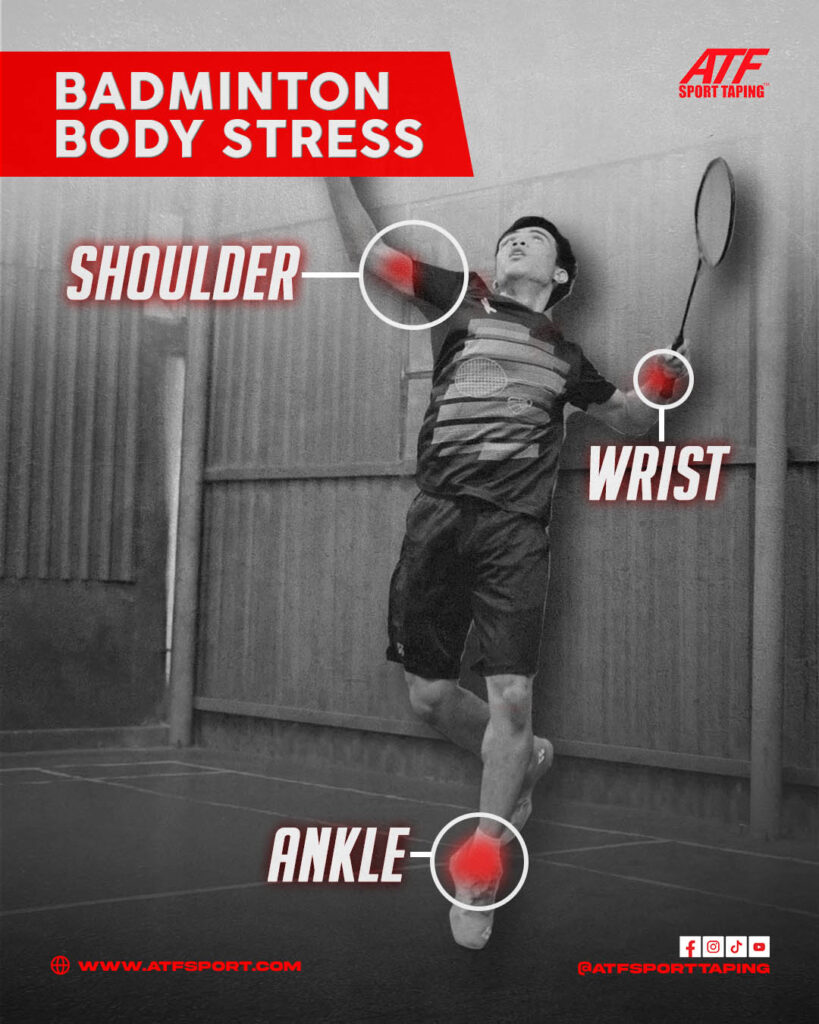
Badminton may look effortless when played well, but behind every rally lies significant physical stress on the body. From explosive jumps to rapid directional changes, badminton places repeated strain on muscles, joints, and connective tissues. Understanding where this stress occurs—and how to manage it—is key to staying consistent, injury-free, and competitive on court.
Why Badminton Creates High Body Stress
Badminton is one of the fastest racket sports in the world. Players constantly accelerate, decelerate, jump, and twist within seconds. These movements are often repeated hundreds of times in a single session, creating cumulative stress rather than just one-time impact.
Unlike endurance sports, badminton combines speed, power, and agility, which means the body rarely gets full rest during play. Over time, unmanaged stress can lead to fatigue, reduced performance, and overuse injuries.
Key Body Areas Under Stress in Badminton
1. Wrist and Forearm
The wrist absorbs repeated snapping motions during smashes, drops, and clears. Poor technique or overtraining can cause tendon strain, wrist pain, or even chronic inflammation.
Consistent support and proper grip technique are essential to reduce excessive load on the wrist.
2. Shoulders and Upper Back
Overhead shots place heavy stress on the shoulder joint and surrounding muscles. Repetitive smashes without adequate recovery can result in shoulder impingement, rotator cuff strain, or stiffness that affects shot control.
Strong shoulder stability and controlled technique help manage this stress effectively.
3. Knees
Lunges, jumps, and sudden stops make the knees one of the most vulnerable areas in badminton. Poor landing mechanics or muscle fatigue increase the risk of knee strain and ligament stress, especially during long rallies.
4. Ankles and Feet
Quick lateral movements and abrupt direction changes put constant pressure on the ankles. Without proper stability, players may experience ankle sprains or recurring instability that affects confidence on court.
The Impact of Unmanaged Body Stress
When body stress isn’t managed properly, players often experience:
- Slower reaction time
- Reduced shot accuracy
- Early fatigue during matches
- Increased risk of recurring injuries
This directly affects consistency and long-term performance.
Managing Body Stress for Better Performance
Smart players don’t just train harder—they train smarter. Effective stress management includes:
- Proper warm-up and cooldown routines
- Strength and mobility training
- Adequate rest between sessions
- Joint and muscle support during play
This is where ATF Sport Taping plays an important role. ATF Sport Taping helps provide targeted support to high-stress areas like the wrist, knee, ankle, and shoulder—enhancing stability while allowing natural movement. With better support, players can reduce excessive strain and move with greater confidence on court.
Play Smart, Protect Your Body
Body stress in badminton is unavoidable—but injuries are not. By understanding where stress occurs and taking proactive steps to manage it, players can maintain performance, prevent setbacks, and enjoy the game longer.
Support your body, respect recovery, and let smart preparation keep you strong on every rally. 🏸